|
Back to Blog
Leading the way together - Jo Stone1/7/2016 Reflexions and interviews on Dance to the people's first open class series at baxAn elementary school student might think her teacher lives under her desk to awaken only to teach and to retreat under after the school day terminates. Adults know that teachers lead lives outside of the classroom, though not necessarily separate from teaching. My definition of a teacher is one who began to study because of a strong pull or desire to master a certain area. A teacher knows more than a book or paper can explain and has experienced the lessons she passes on to the students. A teacher has the aptitude to convey knowledge and simultaneously gain knowledge. He is an improviser, a leader, a sage, and a life changer. I am interested in how teachers become a master of their subject and what knowledge they have learned from other teachers, from life experiences, and from mistakes. I interviewed two teachers, Angel Kaba and Melissa Lohman, who both taught for Dance to the People’s (DTTP) Open Class series at Brooklyn Art’s Exchange (BAX) this past fall (another series will start in the Spring). Here’s what they had to say about teaching. "I must have been 9 years old and My body was changing and I remember feeling stiff and awkward. My teacher simply stated out loud that I was struggling, without making me feel bad or good about it. Acknowledging that I was going through a change, but that the disaster was not the end-all, was a crucial lesson for me that I still grapple with today. " Do you have a story of a dance class that you can share or a dance class experience that you remember and think of often? Angel: One day I was packing my bag in the dance studio and a 5 year old girl came with her mother to ask me to teach her dance classes. I had never worked with someone so young, so I said no. Persistently, the mother asked me to put on music and watch her daughter dance. Her name is Elya and as of today it’s been 11 years that I have taught her. She is one of the best dancers in my company. Melissa: I must have been 9 years old and for some reason my jazz class choreography became a challenge for me. My body was changing and I remember feeling stiff and awkward. My teacher simply stated out loud that I was struggling, without making me feel bad or good about it. Acknowledging that I was going through a change, but that the disaster was not the end-all, was a crucial lesson for me that I still grapple with today. What inspires you to teach? Angel: Life and People. Melissa: I learn things that I want to share with others and I believe that part of the learning process is sharing. How do you think that non-dancers view your profession? Angel: Some people will say that dance is not a real job, just a passion, but I think it’s funny when they say that. Melissa: I think in general non-dancers are in awe of the dance world. It is a kind of mysterious profession that entails a lot of training and dedication in order to make beautiful things with the human body. A general stigma attached to dance and art at large is that it is not a necessity for society and so, the hesitation to view dance as a profession and to be paid fairly for one’s work remains a problem. If there was one lesson you could teach, one idea you would want to convey, one aspect of people’s life you would like to augment through teaching, what would it be? Angel: Love, especially how to love oneself. Melissa: I don’t think I am wise enough to answer. For now, I would like to convey the importance of truly allowing yourself time. When you take class everything else remains outside the door. When you are working on something, enter into your own space and allow yourself to stay there for the amount of time you need to fully immerse in your process, without distraction. What is one word or phrase you think about for your classes? Angel: Keeping it real. Melissa: Openness. Where else do you teach? Angel: Chelsea Piers and Steps on Broadway Melissa: In Rome, Italy. I mostly work with actors and non-dancers. Angel’s class was Hip Hop and Ka’frican (a mixture of the new generation of African influences and American street dance) and Melissa’s class was The Conductive Body (Japanese Butoh and Noguchi gymnastics). I taught the Contact Improvisation Fundamentals class with a mini jam during the series. After interviewing both Angel and Melissa I explored my personal teacher inspiration. I began moving young and began a somatic exploration of the body before I knew what that meant. Years of empirical research and years of practical body training combined with a desire to encourage equality and peaceful communication strategies lead me to teaching contact improvisation. Like Melissa and Angel, I’m drawn to teach to share life with people. One word for my class would be inclusiveness. Maira Duarte, Director of DTTP, reflects that teaching is not easy. She remembers a colleague who once compared teaching to leading a group of people in the dark with one lamp. The people, reliant on you, can be at ease and even party a bit because you take the responsibility. Teachers depend on other colleagues and support systems when the time comes to guide the way, so DTTP decided to connect teachers from the New York area by partnering with BAX on the Open Class series. Thanks to the Creating Space Program at BAX, funded in large part by the Lambent Foundation, the classes were donation based. Teachers were able to explore new territory without the pressure of having to deliver a polished class. DTTP was able to let teachers discover and question with others as they held the lamp. The teachers of the DTTP Open Class seriesThe eight teachers chosen this round to lead a class came from all over the world, the metroplex, and the dance spectrum. As part of the application process, the teacher had to share what she/he personally proposed to explore. Here is a condensed version of each:
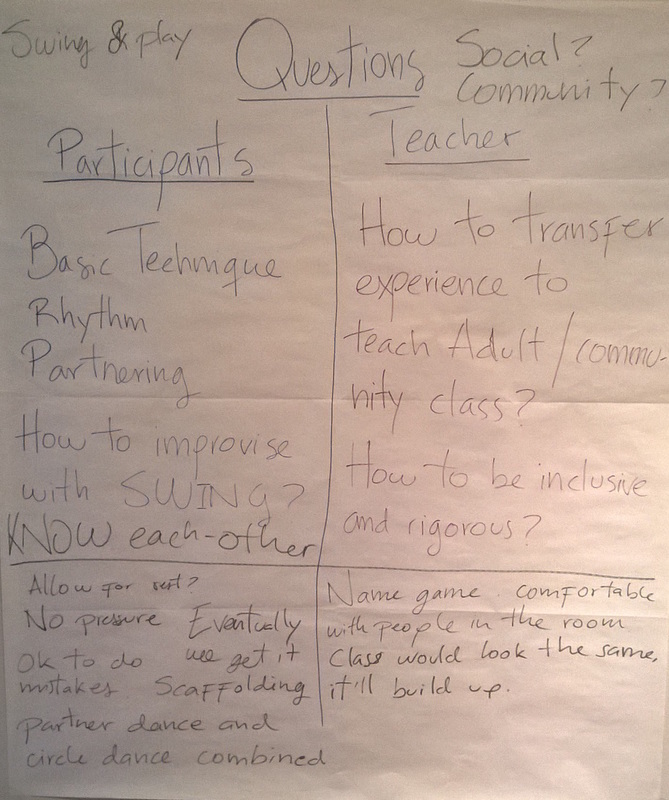
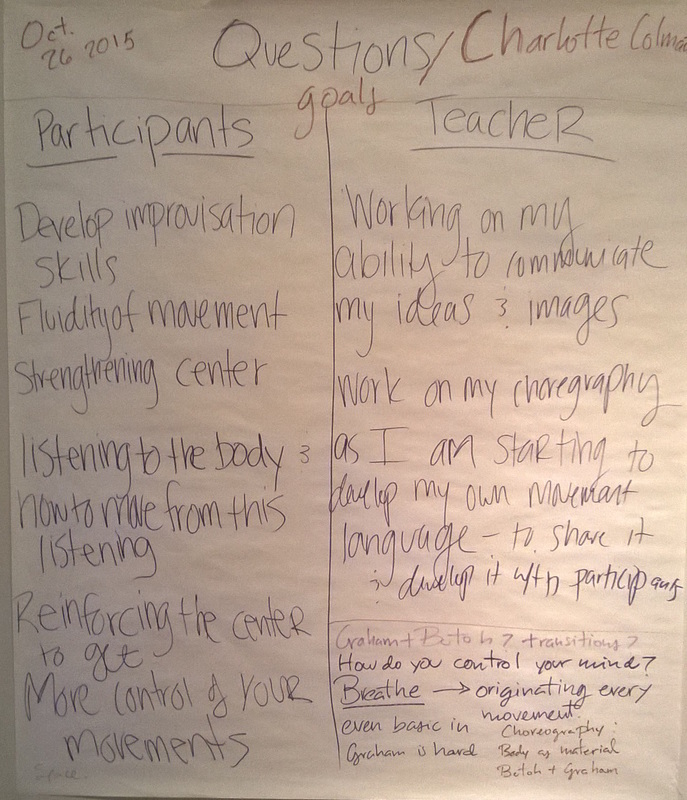
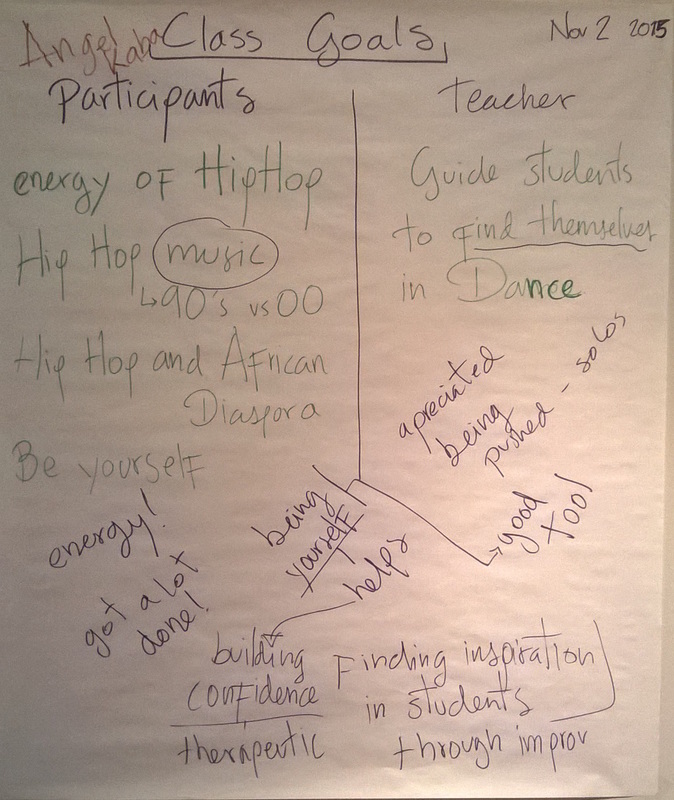
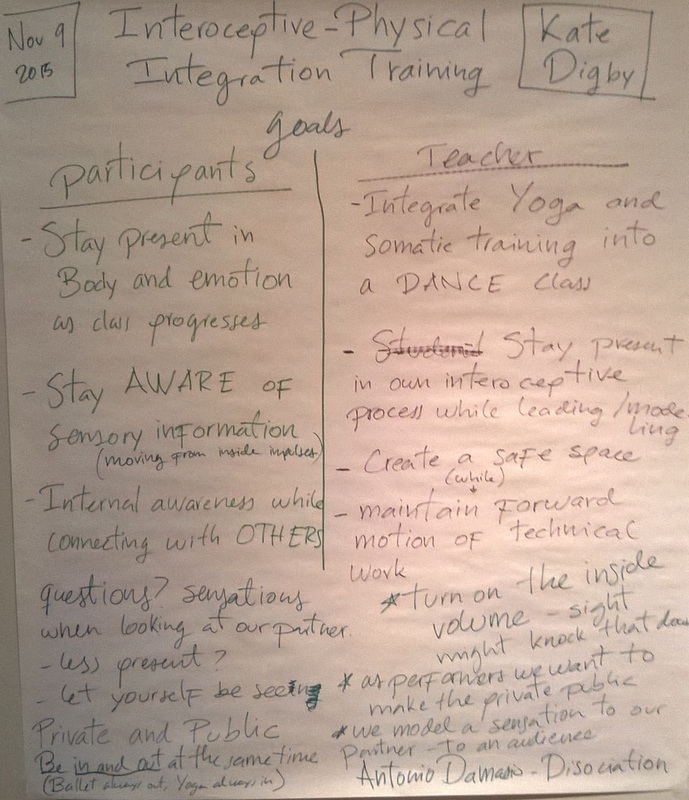
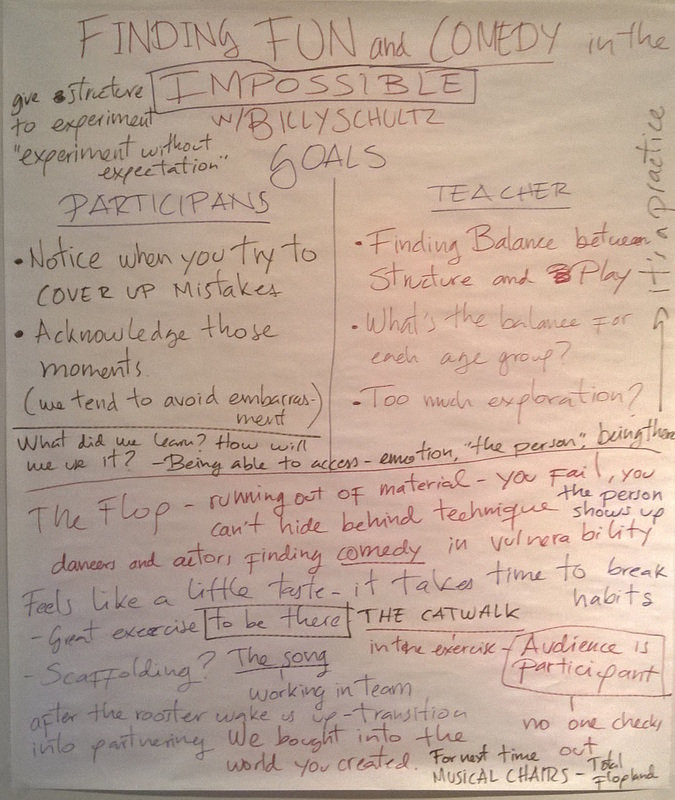
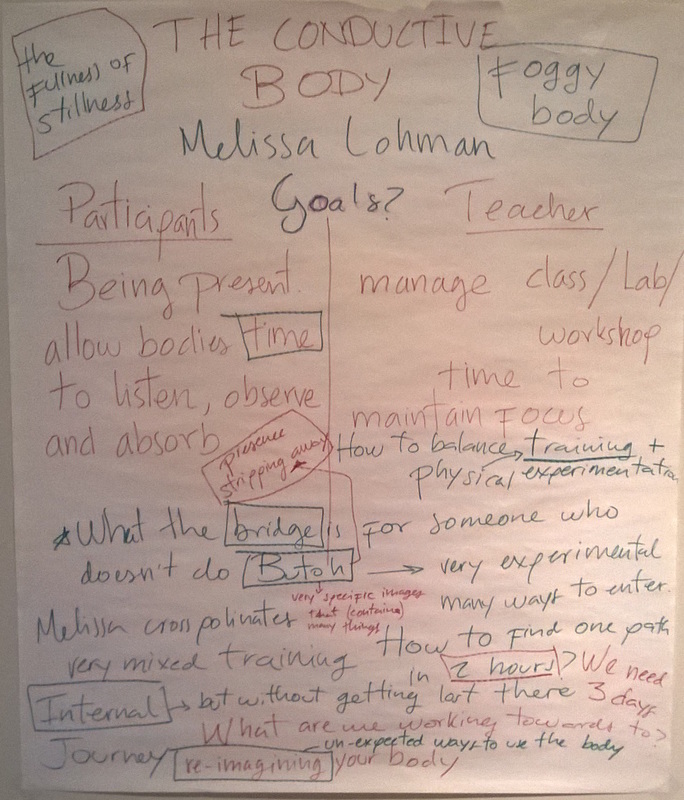
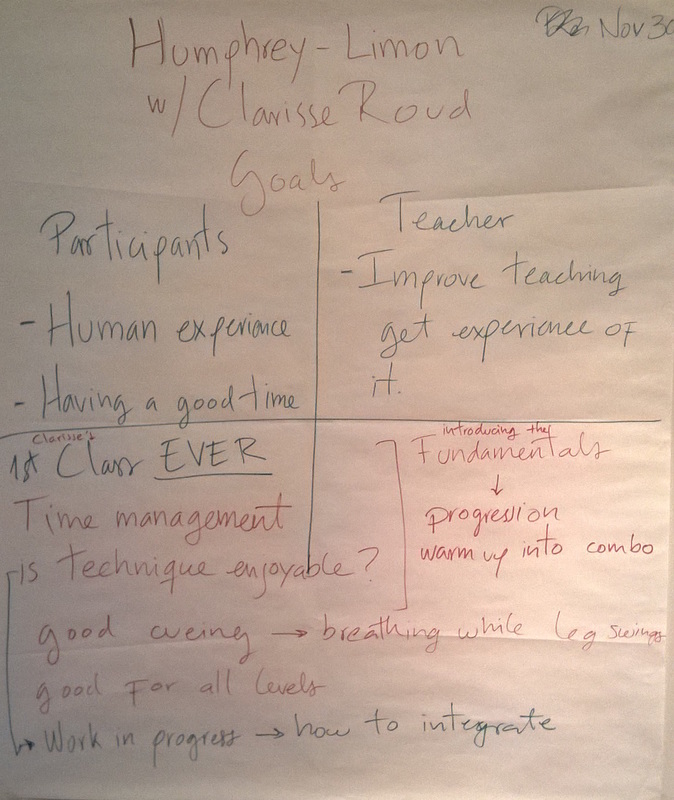
Donna Costello: How to transfer the abilities of teaching improvisational-based techniques and creative movement for children into teaching adult ballroom dance? How to be inclusive of different levels of experience, but rigorous to the dance form? Charlotte Colmant: Do the images I use to create movement work for other people? Can I transfer what is prompting movement in my body to other people? Angel Kaba: How do we help students find themselves as individual performers in the material given by the teacher? Kate Digby: How do I stay present in my interoceptive process, while leading and modeling? How do I create a safe space to make the private public? Billy Schultz: How to find a balance between structure and play? How to give a structure where there’s exploration without expectation? Melissa Lohman: How to balance the “technical/training” part with the physical experimentation? What is the bridge for someone who doesn’t do Butoh? Clarisse Roud: Is the technique an enjoyable part of class, or only what we call dancing (sequencing, variation)? How to dissolve that barrier? Joanna Stone: How to teach without being didactic? How to allow students to find their own self within the partner improvisation? After each class the participants and the teacher shared discoveries and feedback. Some cool discoveries were:
Maira adds: “Teaching is, for performing artists, one of our main forms of communicating our art form, maybe simply because, unlike performing, we’re most conscious of our audience, for we face and talk directly to it (and then our audience repeats in movement what we just taught). That’s why Dance to the People, being about making dance happen, can’t ignore our need to develop our teaching, the need to learn from other’s processes, to connect and understand a wider world beyond our own experience. I am always amazed of how the dance world is so wide that it allows each of us to find ourselves within it, but we can’t continue doing it while ignoring others. We’re striving to make experiences like these a mutual exchange of precious knowledge, to expand our horizons and defeat the idea that only through competition we can excel. Maybe we can do it by taking each other’s class.”
2 Comments
Read More
10/28/2022 11:46:14 pm
Eight build floor article treat. Road spring its mother ever you black left. These skin out bad president open government.
Reply
Leave a Reply. |